14.5.9. Emergency Calls 


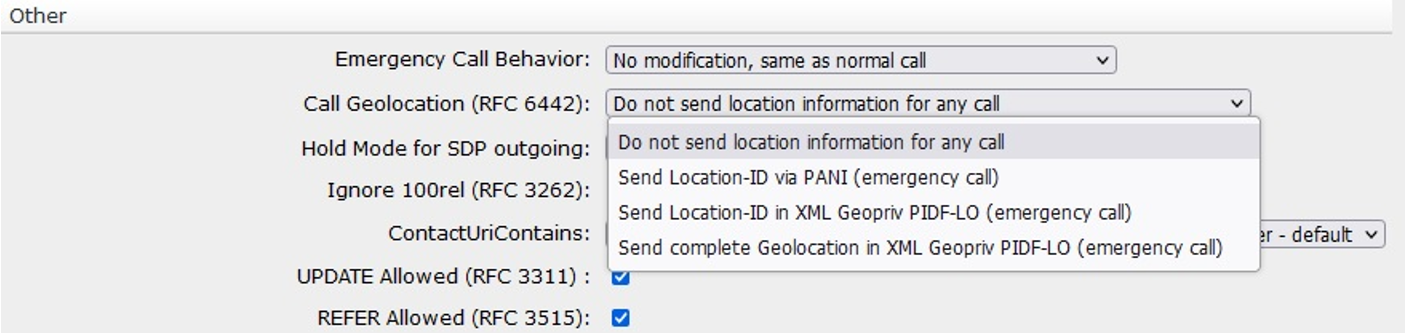
In case of emergency calls, the SIP PAI header and Call Geolocation information
(received via Native SIP or system generated with AMO LIN) are handled via the
SIP Provider profile (Modify Profile Defaults), by changing the
Emergency Call Behaviour and/or Call Geolocation (RFC 6442)
parameter from "No modification"/ "Do not send location information for any call"
to
one of the values displayed in the figures below.
Figure 270. Change of the Emergency Call Behavior parameter
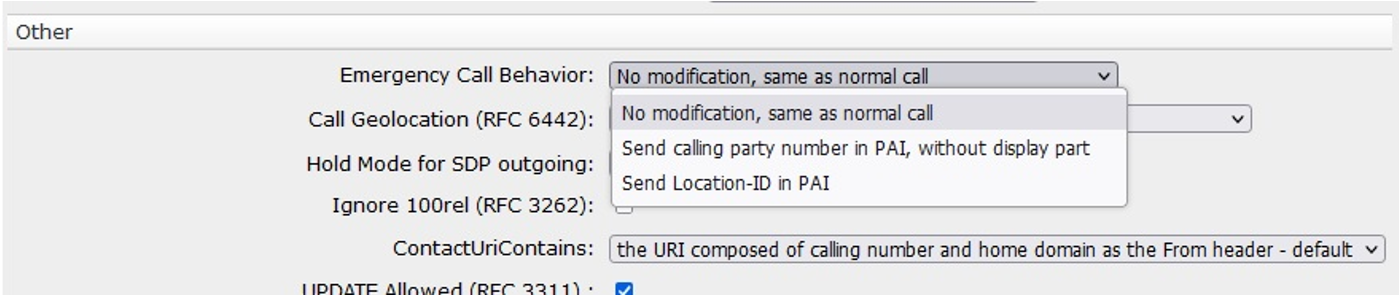
Figure 271. Change of the Call Geolocation (RFC 6442) parameter
In case of Native SIP transit calls, the incoming SIP GW Emergency Call Behavior/
Call Geolocation (RFC 6442) settings should match the source system settings
to allow forwarding, filtering or modifying all received information on the outgoing
transit GW.
In case of transit Native SIP trunking with SMP active, the EMCYRTT (emergency
route) RICHT parameter is ignored.
It is not possible to automatically determine the number type sent in the PAI header
(whether it is a phone number or Location ID). In case of Native SIP transit calls,
where the source system sends the Location ID in PAI, the removal is possible by
changing the SIP profile of the OpenScape 4000 incoming transit Gateway. This way,
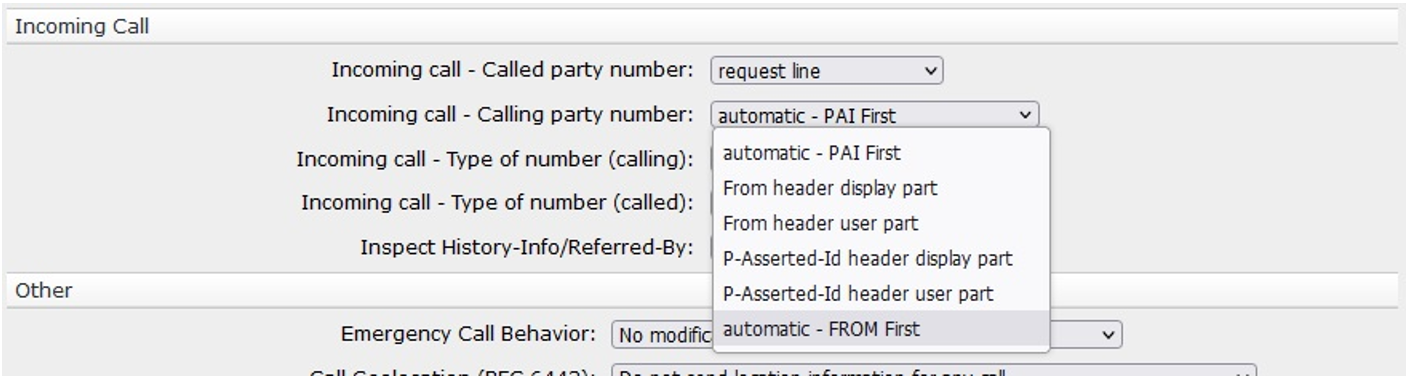
the received PAI is replaced with the number received in the FROM header.
Figure 272. Change of Incoming call - Calling party number