10.24.4.5. GDTR Conversion for Called Part Number and SID/ANI info 


Here the incoming call is routed by the dialled number (DNIS) but
with additional routing and display information depending on the calling
party number.
This example defines Called party Number conversion then possibly
additional conversion for SID/ANI
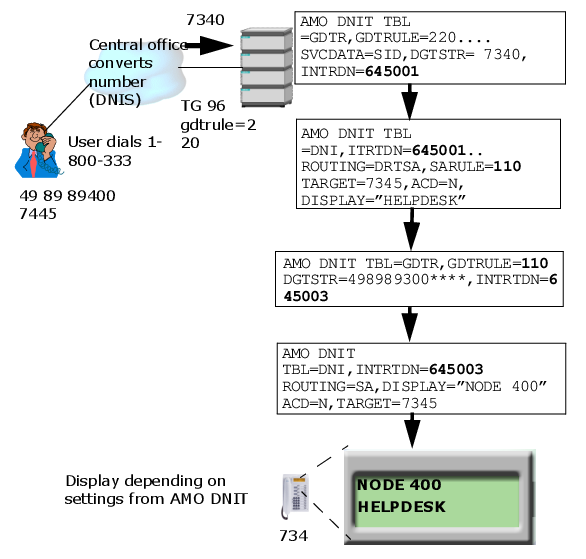
In the example above
any caller with the caller ID of 498989400xxxx will be routed to station
7345 and will present 2 lines in the display ,line 1 being the display
of a known caller
- Set rule number in BUEND to connect Rule to Trunk and Trunk Group
CHA-BUEND:GDTRRULE=220,TGRP=96;
- Add the routing and display information for a known caller
ADD-DNIT:TBL=DNI,INTRTDN=645003,ROUTING=SA,
DISPLAY="NODE 400",ACD=N,TARGET=7345;
- Add the rule to verify any caller from 498989400
ADD-DNIT:TBL=GDTR,GDTRRULE=110,DGTSTR=498989400****,
INTRTDN=645003,SVCDATA=NOREQU;

ADD-DNIT:TBL=DNI,INTRTDN=645002,ROUTING=DRTSA,
DISPLAY="HELPDESK ",ACD=N,TARGET=7345,SARULE=110;

ADD-DNIT:TBL=GDTR,GDTRRULE=220,DGTSTR=7340,
INTRDN=645002,SVCDATA=SID;
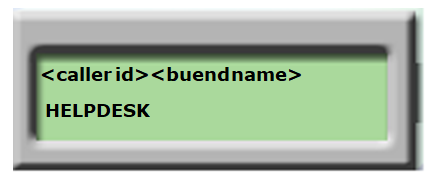
This should provide a digit conversion based on GDTR tables with digit pattern 7340 to terminate to STNO=7345 and if SID/ANI /CLIP information matches 110 the station will receive the display: or if SID/ ANI/ CLIP information DOES NOT match rule 110 the display is:
 In this example there is a digit conversion for the called party number.It is possible to only alter the routing dependent on the SID /ANI / CLIP information i.e the Calling Party NumberThis requires an entry of a GDTR rule for DNIS routing (129 and above) as a trunk group cannot be pointed to a GDTR table used for SID/ANI routing (1-128) in this case a Wild card could be required for the DNIS entry (#) to allow for any dialled digits.
IMPORTANT:
The use of digit stings with wild card entries e.g # can be considered. As calls are pointed to the DNIT table from the trunk group there is a possibility several different digit strings are received as Called Party Number. If normal DDI is required then the # should be omitted and a separate entry in DNIT is required for specific called party numbers.