10.2.9.1. When is Payload Survivability Used? 


There are the following reasons to handle connections to access points via trunk traffic
instead
of via IP:
If in AMO UCSU parameter BCHLCNT is set to „0“.
If the quality of the existing connections in the IP network is bad
The quality of the active payload connections via the IP network is
permanently monitored.
If the packet delay or the packet loss rate exceeds the predefined
or upper limits, the connection is labeled as „Bad Quality“. If these
variables drop below the likewise predefined lower limits, the connection
is relabeled as „Good Quality“. The limit values are set in the PLQUAL
branch in AMO SIPCO (see Section
2.1, “Payload Quality (PLQUAL)”).
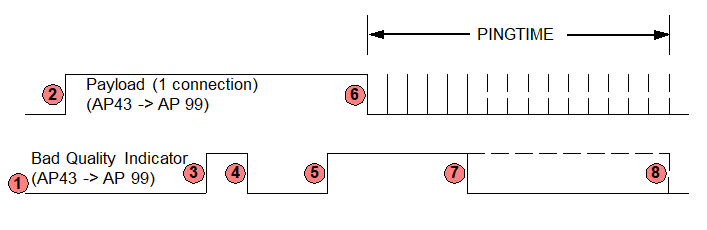
Figure 30 “Blocks the IP connection for payload due to „Bad Quality“”
indicates the sequences:
Figure 195. Blocks the IP connection for payload due to „Bad Quality“
|
At the start of appraisal, the IP connection
quality of AP 43 to AP 99 is labeled as good.
|
|
|
A payload connection is established via IP.
|
|
|
The constant monitoring of the connection quality
reports “Bad Quality“
From this time on, no further payload
connections are established between AP 43 and AP 99 via IP. If available,
an alternative route via payload survivability is used. Otherwise, the
connection request is rejected.
The existing payload connection
is not disconnected, despite “Bad Quality“.
|
|
|
The constant monitoring of the connection quality
reports a return to “Good Quality“
The establishment of payload
connections between AP 43 and AP 99 over IP resumes from this time on.
|
|
|
as per 3
|
|
|
The subscriber terminates the payload connection
At this time, the connection is labeled as “Bad Quality“.
As
a result of the preceding payload connection, “UDP ping“ messages
are now transmitted every 5 seconds, in order to further monitor the
behavior of the IP connection.
|
|
|
The test with “UDP ping“ messages shows
that the connection quality has been restored.
The “Bad Quality
indicator“ is reset.
From this time on, payload connections are
again established between AP 43 and AP 99 via IP.
|
|
|
If the tests with “UDP ping“ messages are
unsuccessful, the “bad quality indicator“ is reset after expiry of
PINGTIME.
PINGTIME is configured in the TIMING branch
of the AMO SIPCO. The value range is between 0 and 3600 seconds.
Important
|
If several payload connections are running in parallel between 2 access
points or between an access point and HG 3500, these may provide differing
quality statements. In all events, the „Bad Quality“ status of a
connection is always prioritized over any number of „Good Quality“
connections.
In other words, if 10 connections report „Good Quality“ and 1
reports „Bad Quality“, no further IP connections are established
until the connection with the status of „Bad Quality“ has returned
to a status of „Good Quality“. For information on possible sequences,
see Figure 30 “Blocks the IP connection for payload due to „Bad Quality“”.
All payload routes between the central system (all HG 3500 modules)
and an access point are labeled „Bad Quality“ as soon as signaling
survivability is activated for the access point. In this case it is assumed
that a fault affecting the route between the central system and access
point is having the same effect on the payload connections.
If the blocking of the availability of subscriber lines in an access
point without payload survivability due to poor IP connections is to
be prevented („Bad Quality“), payload quality handling can be deactivated
for the access point in the AMO UCSU with the parameter PLCHECK.
This means that every call is switched regardless of the quality of the
IP connection. In the worst case scenario, this can result in the call
being signaled, but the voice link remaining dead because no packets
with payload are received.
The capacity of the IP link is exhausted
The transport capacity for payload connections between an access point
and the IP network is limited by the maximum number of simultaneous connections
possible (30/60/120 connections depending on the hardware) and the maximum
bandwidth configured in the Resource Manager. If the full transport capacity
is used, the payload survivability route is automatically used for further
calls within the OpenScape 4000 system. The path selection makes no distinction
as to whether there is no path available because of a failure in the
IP network or because all available routes from the access point are
already occupied.
Because of the restrictions with regard to payload survivability,
the system must be configured so that this spillover route is only used
in cases of exceptional overload.
If a subscriber specifies via access code that he does not wish to use IP
In OpenScape 4000 system, the WABE code FRCALTRT can be used
to force the survivability route. The access code FRCALTRT can
be used by anyone and is not subject to any class of service requirements.
The same payload survivability restrictions apply for these calls.
Payload Survivability when signaling survivability is active
If a OpenScape 4000 SoftGate is in signaling survivability mode, then
the connections to all other APs which are in a different source group
than the designated OpenScape 4000 SoftGate, will be established over
the alternative route.
Connection to all APs which share the same source group with the designated
OpenScape 4000 SoftGate will be established over LAN if possible. If
this is not possible, then no connection is possible.
As for IPDA traditional shelves, the functionality is controlled by
the parameter NPLMSURV in AMO Zande > ALLDATA. If this
parameter is set to NO then we have the same functionality as
in versions prior to HiPath 4000 V5. This means all payload routes between
the host system (all HG 3500 modules) and an access point are labeled
as „Bad Quality“ as soon as signaling survivability is activated
for the access point. In case of alternative routing (signaling survivability
is active) the payload matrix between HHS and the corresponding AP will
be blocked. All available routes from HHS to AP are marked as BAD IP.
If NPLMSURV is set to YES then the traditional IPDA
shelves will have an enhanced behavior similar to the OpenScape 4000
SoftGate behavior mentioned above.
I.e. an IPDA shelf in signaling survivability mode will connect to
OpenScape 4000 host system. All other APs which are in a different source
groups will connect over the alternative route.
On the other hand connection to all APs which share the same source
group with the designated OpenScape 4000 SoftGate will be established
over LAN if possible, and if not, then no connection is possible.
IMPORTANT:
Parameter NPLMSURV has no effect on a OpenScape
4000 SoftGate which is in Signaling Survivability mode. OpenScape 4000
SoftGate always follow the enhanced behavior.
IMPORTANT:
Parameter PLMSGSRV in AMO ZANDE > ALLDATA
has no effect.